Blog Post
Published - Apr 29, 2026
The Role of AI in Cybersecurity Today (2026)
AI is helping organizations detect threats faster, protect sensitive data, and build safer digital experiences.
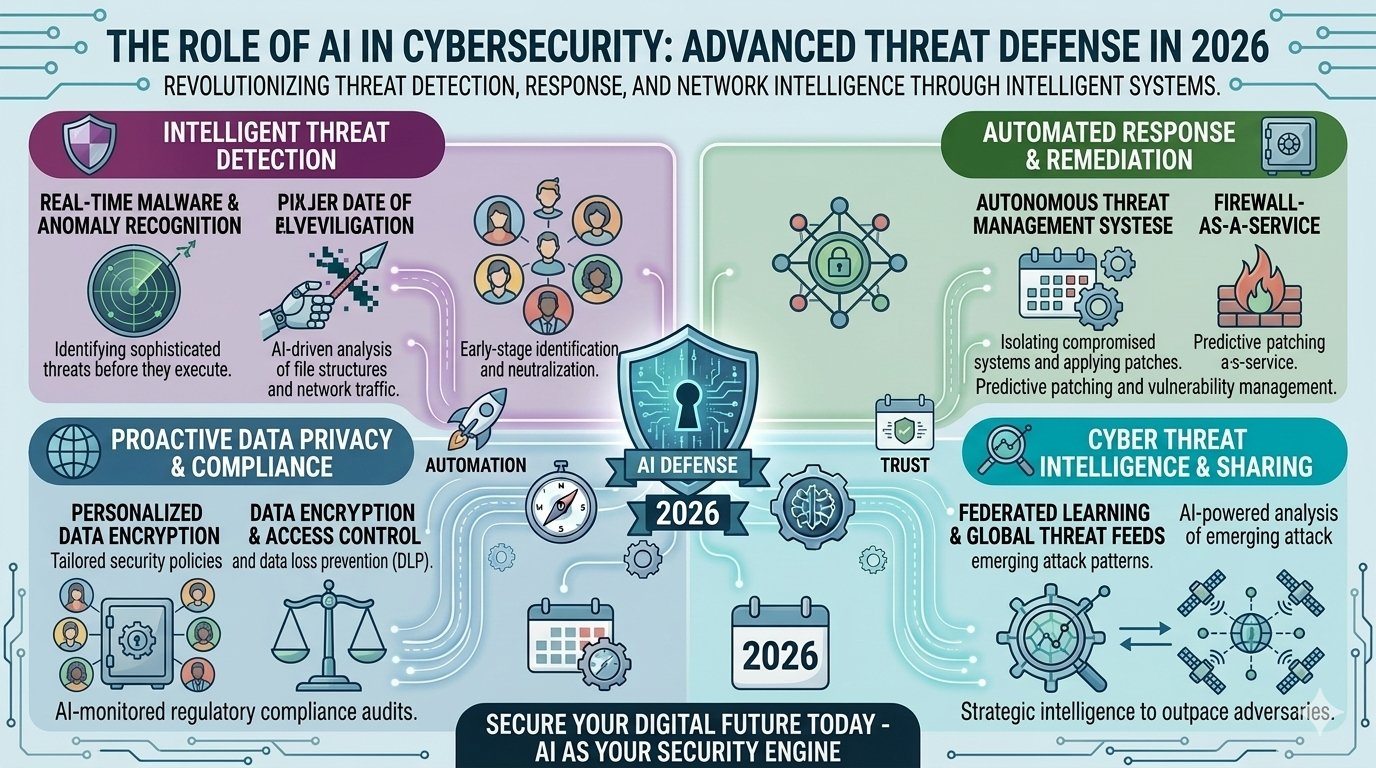
Cybersecurity teams are under constant pressure to detect threats faster, respond earlier, and protect more accounts, devices, and cloud systems than ever before. That is why AI now plays a central role in modern security operations. Instead of reviewing every alert manually, teams use AI to spot suspicious patterns, prioritize risks, and reduce response time when something unusual happens.
This matters for both organizations and individuals. The same systems that monitor enterprise networks can also help detect phishing attempts, unusual login behavior, and fraud signals in consumer tools. Readers looking at the user side of that same issue may also want to see how AI is impacting digital security and password protection and how to create an unhackable password in 3 seconds.
How AI Helps Security Teams
AI is especially useful in environments where the volume of events is too high for humans to review efficiently. Security platforms use machine learning to identify traffic anomalies, flag suspicious downloads, detect account takeover attempts, and surface the alerts that deserve immediate attention. This does not replace analysts, but it helps them focus on the highest-risk activity first.
Another important role is threat prediction. AI models can compare current behavior with historical patterns and warn teams when activity starts to resemble known attacks. That may include credential stuffing, automated phishing, malware delivery, or lateral movement inside a network.
Where AI Is Used Most Often
- Email security systems that filter phishing and malicious attachments.
- Identity tools that detect unusual sign-ins or impossible travel patterns.
- Fraud prevention tools that analyze transaction and device behavior.
- Security operation centers that need help prioritizing massive alert volumes.
Organizations also connect AI security tools with broader digital operations. Businesses exploring automation in customer support, analytics, or hiring should think about defense at the same time, which is why this topic connects well with AI in business trends and use cases.
Limits and Security Reality
AI improves speed, but it is not perfect. Attackers also use automation, and detection tools can still produce false positives or miss novel threats. Teams need good policies, human review, strong password hygiene, and regular security updates in addition to AI. That broader caution is part of the same story covered in challenges and limitations of AI.
The best security posture comes from combining AI assistance with skilled people, clear access controls, and practical user education. AI helps defenders move faster, but resilience still depends on layered protection.