Best AI Productivity Tools in 2026 to Save Time and Work Smarter
Published · Updated
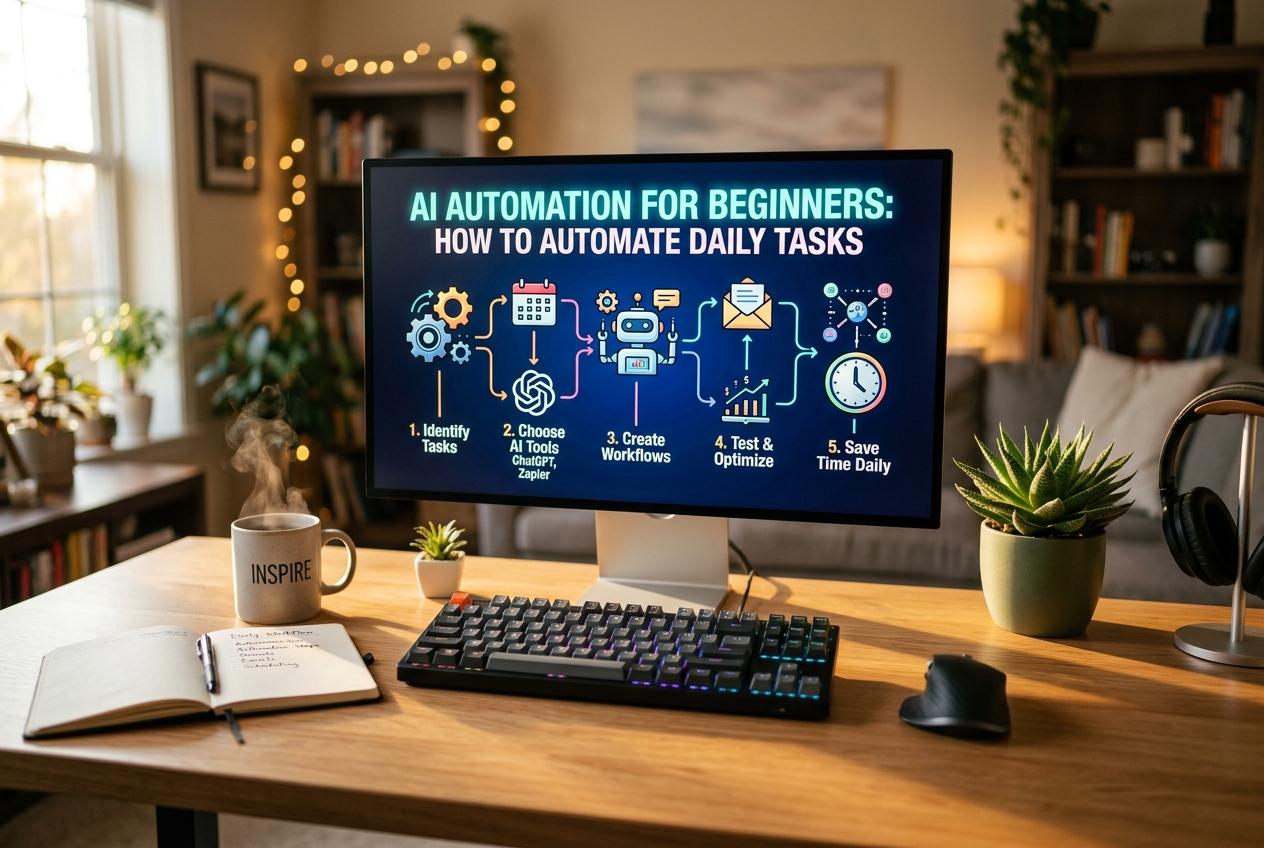
Artificial intelligence is changing the way people work. Tasks that once took hours, such as writing reports, organizing projects, researching information, summarizing meetings, and managing emails,…
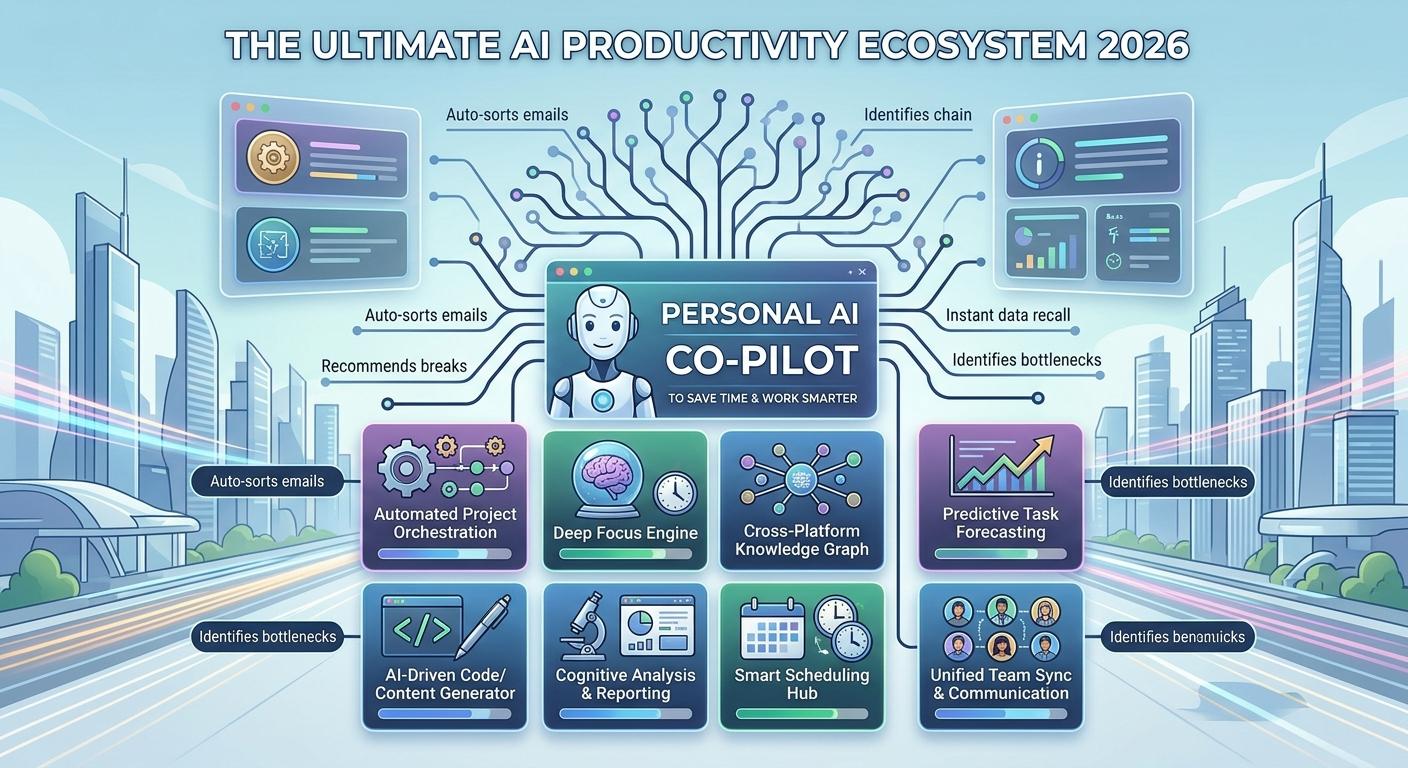
Artificial intelligence is changing the way people work. Tasks that once took hours, such as writing reports, organizing projects, researching information, summarizing meetings, and managing emails, can now be completed much faster with the help of AI productivity tools.
Whether you are a student, freelancer, business owner, content creator, or office professional, the right AI tools can help you spend less time on repetitive work and more time on tasks that require creativity and decision-making.
In 2026, AI productivity software goes beyond simple chatbots. Many tools now support document creation, automated workflows, intelligent scheduling, meeting summaries, research assistance, and AI-powered task management. Some can also connect with your existing apps to help automate routine processes. <Cite refs={["turn951946search0","turn951946search1","turn951946search2"]}/>
However, choosing the best AI productivity tools can be confusing. New applications appear regularly, and many existing platforms are adding AI features to their services. The key is to find tools that solve real problems rather than adding unnecessary complexity to your daily routine.
In this guide, we will explore the best AI productivity tools in 2026, what each one does best, and how you can use them to work smarter, improve efficiency, and save valuable time.
What Are AI Productivity Tools?
AI productivity tools are applications that use artificial intelligence to help people complete work more efficiently. They can generate content, summarize documents, analyze information, organize tasks, automate workflows, and assist with everyday decisions.
For example, instead of manually summarizing a lengthy report, you can use an AI assistant to extract the main points and create a concise overview. Similarly, an automation platform can transfer information between apps, reducing the need for repetitive copy-and-paste work.
Common categories of AI productivity software include:
AI writing assistants: Help draft emails, articles, reports, and business documents.
AI research tools: Find information, summarize sources, and organize research.
AI task management tools: Help organize projects, prioritize tasks, and track progress.
AI meeting assistants: Produce transcripts, summaries, and action items.
AI workflow automation tools: Connect applications and automate repetitive processes.
AI note-taking apps: Organize notes and make information easier to find.
AI presentation tools: Turn ideas and written content into visual presentations.
You do not need to use every category. Start with the tasks that consume most of your time and choose tools that address those specific challenges.
1. ChatGPT — Best Overall AI Productivity Tool
<PLACEHOLDER_IMAGE: ChatGPT AI assistant helping with writing research and task planning on a laptop>
ChatGPT is a versatile AI assistant that can help with a wide range of everyday work. You can use it to brainstorm ideas, draft emails, summarize documents, explain complicated topics, create outlines, analyze information, and assist with coding.
One of its biggest advantages is flexibility. Rather than switching between multiple specialized applications for every small task, you can use one assistant for several different parts of your workflow.
For example, a content creator can ask ChatGPT to generate article ideas, build an outline, suggest SEO keywords, improve a draft, and prepare social media captions based on the finished article.
Key features
AI writing, rewriting, and summarization.
Brainstorming and research assistance.
File analysis and help with data-related tasks.
Coding support and problem-solving.
Image understanding and image creation, where available.
Projects and other productivity features on supported plans.
Who should use ChatGPT?
ChatGPT is useful for students, freelancers, marketers, researchers, business owners, and professionals who want an all-purpose AI assistant.
Its main limitation is that it can produce inaccurate information or overlook important context. Always verify important facts, especially when working with financial information, legal documents, or business decisions.
Best for: Everyday productivity, content creation, research assistance, and general-purpose AI support.
2. Notion AI — Best for Notes and Knowledge Management
<PLACEHOLDER_IMAGE: Notion AI workspace with organized notes project documents and task databases>
Notion combines note-taking, document creation, project organization, and knowledge management in one workspace. Its AI capabilities can help users create content, summarize information, search connected knowledge sources, and organize information within supported workflows.
If you regularly manage research notes, meeting records, project documentation, or content calendars, Notion AI can help bring that information together.
Imagine working on a marketing campaign with dozens of notes, research documents, and task lists. Instead of manually reviewing everything, you can use supported AI features to summarize information and locate relevant details.
Key features
AI-assisted writing and editing.
Summaries of documents and notes.
Search and question-answering across supported workspaces.
Project documentation and knowledge organization.
Integration with task databases and team workflows.
Who should use Notion AI?
Notion AI is a strong option for content teams, students, project managers, and businesses that need an organized knowledge base.
However, its benefits are greatest when your information is already organized in Notion or connected sources. If you only need occasional writing assistance, a general-purpose AI chatbot may be sufficient.
Best for: Knowledge management, documentation, team collaboration, and organized workspaces.
3. Microsoft 365 Copilot — Best for Office Productivity
<PLACEHOLDER_IMAGE: Microsoft 365 Copilot assisting with Word documents Excel spreadsheets and Outlook emails>
For professionals who already use Word, Excel, PowerPoint, Outlook, and Teams, Microsoft 365 Copilot can bring AI assistance into familiar work applications.
Instead of copying information into a separate tool, eligible users can access AI features within supported Microsoft workflows. Depending on the application and subscription, these features can help draft documents, summarize information, analyze spreadsheet data, and prepare meeting recaps.
Key features
AI assistance in supported Microsoft 365 applications.
Drafting and rewriting documents.
Help analyzing and interpreting spreadsheet data.
Presentation creation and refinement.
Email assistance and meeting summaries.
Who should use Microsoft 365 Copilot?
It is particularly useful for office workers, business teams, analysts, and organizations that depend on Microsoft 365.
Availability depends on the subscription, account configuration, and supported features. Businesses should also review access permissions and organizational data policies before enabling AI features across sensitive workflows.
Best for: Office work, business documents, spreadsheets, presentations, and workplace collaboration.
4. Google Gemini — Best for Google Workspace Users
<PLACEHOLDER_IMAGE: Google Gemini helping organize Gmail Google Docs and Google Sheets productivity workflows>
Google Gemini is a useful AI assistant for people who rely on Google's ecosystem. Depending on the plan and available integrations, its AI capabilities can support writing, research, summarization, planning, and work across applications such as Gmail, Docs, Sheets, and Meet.
For example, a freelancer could use AI assistance to draft a professional email, organize information for a proposal, and summarize notes from a client meeting.
Key features
Writing and summarization assistance.
Research and brainstorming.
Support for documents and spreadsheets.
AI features within eligible Google Workspace applications.
Help organizing information and preparing content.
Who should use Google Gemini?
Gemini is worth considering for students, freelancers, remote workers, and businesses that already use Google Workspace.
The main advantage is ecosystem integration. However, specific features vary by account and subscription, so confirm what is included in your plan.
Best for: Gmail productivity, document creation, research, and Google Workspace workflows.
5. Claude — Best for Long Documents and Detailed Writing
<PLACEHOLDER_IMAGE: Claude AI assistant reviewing a long report and improving professional written content>
Claude is an AI assistant that is particularly useful for writing, document analysis, brainstorming, and working through complex information.
If your work involves long reports, detailed proposals, research documents, or extensive drafts, Claude can help organize the material, identify key themes, and improve clarity.
For example, a researcher might use it to summarize a lengthy document, identify questions that need further investigation, and develop a structured outline for a report.
Key features
Long-form writing and editing assistance.
Summarization and document analysis.
Brainstorming and structured reasoning.
Coding assistance.
Support for selected file-based workflows.
Who should use Claude?
Claude is worth considering for writers, researchers, consultants, developers, and professionals who frequently work with detailed documents.
As with any AI assistant, review the output carefully. Summaries may omit important details, and generated statements should not be treated as verified facts without checking the original sources.
Best for: Long documents, detailed writing, research synthesis, and analytical tasks.
6. Zapier — Best for AI Workflow Automation
<PLACEHOLDER_IMAGE: Zapier automation workflow connecting email project management and spreadsheet applications>
Zapier helps connect different applications so they can exchange information and perform actions automatically. Its AI-related features can also help users incorporate language models and intelligent processing into workflows.
For example, you could create a workflow that captures information from a form, summarizes a customer request, adds the details to a tracking system, and notifies the appropriate team.
This type of automation is especially valuable when you repeat the same process dozens or hundreds of times.
Key features
Connections between supported applications.
Automated triggers and actions.
AI-assisted workflow creation and processing.
Data transfer between business tools.
Support for more advanced multi-step automations.
Who should use Zapier?
Zapier is useful for entrepreneurs, marketers, operations teams, and small businesses that want to reduce manual work without building every integration from scratch.
Some workflows require paid plans, and complex automations need careful testing. Start with a simple, low-risk process before automating important business operations.
Best for: No-code automation, connecting apps, and reducing repetitive administrative work.
7. ClickUp — Best for AI Project and Task Management
<PLACEHOLDER_IMAGE: ClickUp project management dashboard with AI task summaries and project timelines>
ClickUp combines project management, task tracking, documentation, and team collaboration. Its AI features, including ClickUp Brain, can help users summarize work, draft content, answer questions about workspace information, and manage parts of their projects.
Instead of manually preparing every status update, a team can use supported AI features to create a first draft based on project information and then review it before sharing.
Key features
AI-assisted task and document creation.
Project summaries and status updates.
Task organization and progress tracking.
Workspace information retrieval.
Team collaboration and workflow management.
Who should use ClickUp?
ClickUp is a good option for project managers, startups, marketing teams, and businesses that want tasks and documentation in one platform.
The number of features can feel overwhelming at first. Set up a simple project structure and introduce AI capabilities gradually rather than trying to configure everything immediately.
Best for: Project management, team productivity, task tracking, and project reporting.
8. Grammarly — Best for AI Writing and Editing
<PLACEHOLDER_IMAGE: Grammarly AI writing assistant correcting grammar tone and clarity in a professional document>
Clear communication is an important part of productivity. Grammarly helps users improve grammar, spelling, clarity, tone, and readability across supported writing environments.
Its AI writing features can also assist with rewriting sentences, generating drafts, and adapting content for different audiences, depending on the plan.
For example, you could turn a rushed email into a polished professional message or make a report easier to understand without changing its main meaning.
Key features
Grammar and spelling suggestions.
Clarity and tone improvements.
AI-assisted rewriting.
Drafting assistance on supported plans.
Writing support across compatible applications.
Who should use Grammarly?
Grammarly is useful for students, professionals, freelancers, bloggers, and anyone who writes frequently in English.
It should not replace careful editing. AI suggestions can occasionally change the intended meaning, so review the final version before sending important messages or publishing content.
Best for: Professional emails, proofreading, editing, and clearer business communication.
9. Otter.ai — Best for Meeting Transcription and Notes
<PLACEHOLDER_IMAGE: Otter AI meeting assistant generating a transcript summary and action items>
Meetings can generate valuable information, but reviewing recordings and writing notes afterward takes time. Otter.ai helps automate parts of this process through transcription and AI-generated meeting summaries.
Depending on the supported setup, it can help capture conversations, identify important points, and organize follow-up information.
For example, after a project meeting, you could review the summary, identify assigned tasks, and transfer the action items into your project management system.
Key features
Automated meeting transcription.
AI-generated summaries.
Searchable conversation records.
Identification of key discussion points.
Meeting-related collaboration features.
Who should use Otter.ai?
Otter.ai is worth considering for remote teams, students, journalists, and professionals who attend frequent meetings or interviews.
Always follow applicable consent requirements and organizational recording policies. Transcription accuracy may also vary with background noise, accents, and overlapping speech.
Best for: Meeting notes, transcription, interviews, and follow-up documentation.
10. Motion — Best for AI Scheduling and Daily Planning
<PLACEHOLDER_IMAGE: Motion AI calendar automatically organizing tasks meetings and daily priorities>
Motion focuses on organizing tasks and schedules. Its AI-powered planning features can help users fit work into available time, prioritize deadlines, and adjust schedules when plans change.
For people with many competing responsibilities, this can reduce the need to manually rearrange a calendar every time a new task appears.
Key features
AI-assisted daily planning.
Task prioritization and scheduling.
Calendar and deadline management.
Project planning features.
Schedule adjustments based on changing priorities.
Who should use Motion?
Motion may be useful for freelancers, entrepreneurs, managers, and busy professionals who struggle to organize their calendars around competing deadlines.
The tool is most helpful when you keep your tasks and deadlines up to date. It cannot make an overloaded schedule realistic if there simply is not enough time to complete everything.
Best for: Daily planning, intelligent scheduling, deadline management, and personal productivity.
Comparison of the Best AI Productivity Tools in 2026
Tool | Best for | Main productivity benefit |
|---|---|---|
ChatGPT | General AI assistance | Handles many everyday tasks |
Notion AI | Notes and knowledge management | Organizes information |
Microsoft 365 Copilot | Office workflows | Assists with documents and meetings |
Google Gemini | Google Workspace | Supports connected work tasks |
Claude | Long-form writing and analysis | Helps process detailed information |
Zapier | Workflow automation | Connects apps and automates processes |
ClickUp | Project management | Organizes tasks and team work |
Grammarly | Writing and editing | Improves communication |
Meeting notes | Reduces manual transcription | |
Motion | Scheduling | Helps organize time and deadlines |
Features, AI limits, integrations, and pricing can change. Review current plan details and regional availability before selecting a paid tool.
How to Choose the Right AI Productivity Tool
The best tool depends on the type of work you do every day. Before signing up for several services, consider these factors.
1. Identify your biggest time-consuming task
Start by identifying what slows you down most. If you spend hours writing, try an AI writing assistant. If you manage numerous meetings, consider a transcription tool. If you repeatedly transfer information between apps, workflow automation may provide the greatest benefit.
2. Check integrations with your existing apps
A tool is more useful when it fits naturally into your current workflow. Check whether it supports your email provider, calendar, documents, project management software, or other essential applications.
3. Compare free and paid plans
Many AI productivity tools provide free access or trials, but advanced features may require a subscription. Check usage limits, integration restrictions, export options, and the cost of additional users before committing.
4. Consider privacy and data security
Avoid uploading confidential customer information, passwords, sensitive financial records, or private company documents unless the service and your organization's policies explicitly permit it.
For business use, review data retention, access controls, administrative settings, and the terms governing AI processing.
5. Measure the actual time saved
Do not assume a tool is useful simply because it has impressive features. Test it on a real task and compare the time required before and after introducing it.
If an automation takes hours to maintain but saves only a few minutes each week, it may not be worth the effort.
Practical Ways to Use AI to Save Time Every Day
You can get more value from AI productivity tools by using them as part of a repeatable routine.
Morning planning: Use a task manager to organize priorities and identify realistic deadlines.
Email management: Draft routine replies with AI, then review them before sending.
Research: Use AI assistants to develop research questions and summarize sources, while verifying important claims.
Writing: Create outlines, improve clarity, and edit repetitive content.
Meetings: Generate summaries and action items, then confirm responsibilities and deadlines.
Automation: Connect frequently used apps to eliminate repetitive data entry.
End-of-day review: Summarize completed work, update tasks, and prepare priorities for the following day.
The most effective workflow is usually a small combination of tools rather than a collection of unrelated subscriptions.
For instance, a freelancer might use ChatGPT for brainstorming, Grammarly for editing, and Motion for scheduling. A small business could use Microsoft 365 Copilot or Gemini for office work, ClickUp for projects, and Zapier for automation.
The goal is to build a system that supports your work without creating additional administrative overhead.
Can AI Productivity Tools Replace Human Work?
AI can automate many repetitive tasks, but it does not eliminate the need for human judgment.
AI-generated content may contain factual errors, meeting summaries can miss important context, and automated workflows may process incorrect information if their inputs are unreliable.
Human review remains essential for important communications, customer-facing content, business decisions, and sensitive information.
Think of AI as a capable assistant that can prepare drafts, organize information, and handle defined tasks. You remain responsible for checking the results and deciding what should happen next.
Frequently Asked Questions
What are the best AI productivity tools in 2026?
ChatGPT is a versatile choice for general assistance, Notion AI for knowledge management, Microsoft 365 Copilot for Office workflows, Zapier for automation, ClickUp for project management, and Otter.ai for meeting notes. The best choice depends on your specific needs.
Are there free AI productivity tools?
Yes. Several tools offer free plans or limited free access, including ChatGPT, Grammarly, ClickUp, and other platforms. Free features and usage limits vary, so check the current terms before relying on a tool for regular work.
Which AI productivity tool is best for small businesses?
Small businesses may benefit from ChatGPT for general assistance, Zapier for connecting apps, and ClickUp for project management. Businesses already using Microsoft 365 or Google Workspace may find it easier to start with the AI capabilities available in their existing ecosystem.
Can AI tools automate daily tasks?
Yes. AI assistants can help draft emails, summarize documents, and prepare reports, while automation platforms can connect apps and trigger predefined actions. More advanced workflows may require configuration, permissions, and ongoing monitoring.
Do AI productivity tools really save time?
They can, particularly when used for repetitive and well-defined tasks. However, the time saved depends on the task, the quality of the output, and the amount of review or setup required.
Final Thoughts
The best AI productivity tools in 2026 are not necessarily the ones with the most features. They are the ones that help you complete important work more efficiently without adding unnecessary complexity.
ChatGPT and Claude are useful for writing, brainstorming, and analysis. Notion AI helps organize knowledge, Microsoft 365 Copilot and Google Gemini support their respective productivity ecosystems, and Zapier helps automate repetitive workflows. Meanwhile, ClickUp, Grammarly, Otter.ai, and Motion address specific challenges involving projects, writing, meetings, and scheduling.
Start with one tool that solves your biggest productivity problem. Use it consistently, evaluate the results, and expand your setup only when you identify a clear need.
Working smarter with AI is not about automating everything. It is about spending less time on repetitive tasks and more time on the work that genuinely matters.
Never type a real password into a web page. That includes this one. Our tools analyse and generate passwords entirely in your browser and never transmit them — see the about page for how that is implemented.